Prefab vs. Custom ADU: What Bay Area Homeowners Should Know
Comparing a prefab and custom ADU in the Bay Area? Learn how site conditions, total project cost, and long-term use should shape your decision.
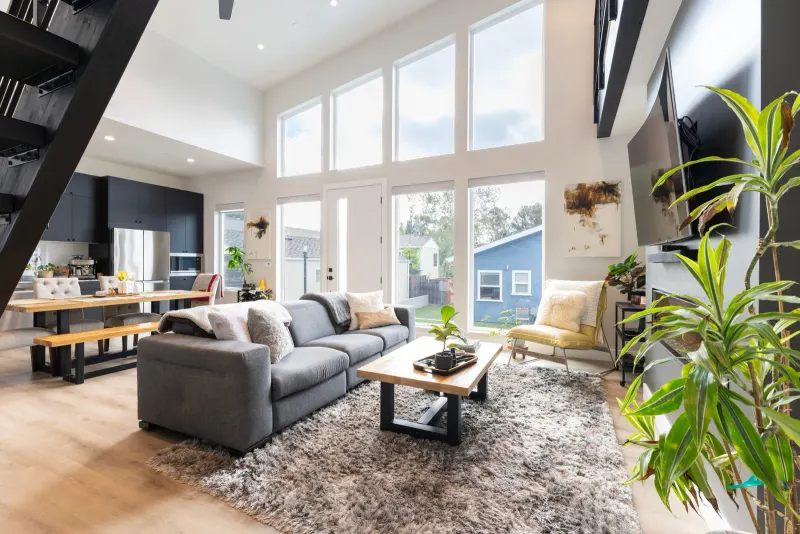
When homeowners start researching ADUs, prefab options can look refreshingly simple: choose a model, place it in the yard, and move in. For some properties, that’s close to how it goes — and prefab can be a genuinely good solution.
But in the Bay Area, the right answer usually depends on the property itself: access, utilities, slope, existing structures, neighborhood conditions, design goals, and how the ADU will be used over the long term. Before committing to prefab or custom, it helps to understand the tradeoffs — and where the real costs and decisions live.
What is a prefab ADU?
A prefab ADU is built partially or mostly off-site, then delivered or assembled on the property. That approach appeals to homeowners because it can offer:
- A defined design
- A faster manufacturing timeline
- Less design decision-making
- A clearer starting price
- A more standardized process
Because a prefab unit is a complete, standalone structure, prefab almost always means a detached ADU — garage conversions and attached ADUs are site-built by nature, which puts them in custom territory from the start.
The other important thing to understand is that prefab does not eliminate site work. The unit may arrive finished, but the property still has to be prepared to receive it — and in our experience that prep is where prefab projects most often surprise people.
What is a custom ADU?
A custom ADU is designed and built around the specific property, the homeowner’s goals, and the site conditions. It tends to make sense when a homeowner wants:
- A better fit with the main house
- A specific layout
- More control over finishes
- Smarter use of a tight or unusual lot
- A design that responds to privacy, light, slope, or access
- Long-term flexibility for family, guests, or rental use
Custom doesn’t have to mean overly complicated or expensive. It simply means the ADU is shaped around the property instead of forcing the property to fit a preset model. On a difficult lot, that flexibility is often what makes the project possible at all.
The biggest difference: the site still matters
For Bay Area homes, the site is frequently the deciding factor — more than the floor plan or the brand of unit.
Conditions that can affect either option include:
- Backyard access and narrow side yards
- Slope and drainage
- Mature trees and retaining walls
- Easements and sewer location
- Electrical capacity
- Fire-rated walls near property lines
- Room for delivery, staging, and construction
A prefab unit may be standardized, but the property never is.
Two homes on the same street can have completely different site requirements, and that’s what shapes both timeline and budget.
What is actually included in the price?
This is one of the most important questions a homeowner can ask, and it’s where prefab comparisons often go sideways. The advertised price for a prefab unit may not include everything required to make the ADU usable on your property.
Before comparing numbers, ask what’s included for:
- Site preparation and foundation
- Utility connections and trenching
- Permits and any city corrections or changes
- Delivery or crane access
- Drainage
- Decks, stairs, or walkways
- Landscaping repair
- Finish upgrades and appliances
Each of those line items is real, and any of them can move a budget meaningfully.
The right comparison is not prefab unit cost vs. custom construction cost. It’s total project cost vs. total project cost.
Once everything required to make a unit livable is included, the gap between the two paths is often smaller than the sticker prices suggest.
When prefab may be a good fit
Prefab tends to work well when the lot is relatively flat, access is straightforward, and the homeowner genuinely likes an existing model without needing much customization. It also helps when utilities are reasonably easy to connect, the property has room for delivery and installation, and speed and simplicity matter more than a tailored design.
Lot shape and size matter just as much for prefab as for custom. Because a prefab unit comes in a fixed footprint, the lot has to accommodate that footprint along with required setbacks, while still leaving room to maneuver the unit into place. An irregular, narrow, or undersized lot can rule out the models a homeowner likes — or force a smaller unit than a custom design could have fit on the same site. A custom build can be shaped to the exact dimensions of the lot; a prefab unit has to be matched to it.
The sweet spot for prefab: It’s an especially strong fit when a homeowner genuinely likes the prefab layout and look, the unit works naturally with the lot, and its style complements the existing home. When all three line up, you get the speed and simplicity of prefab without the downside of a unit that feels dropped in or disconnected — and the cohesion concerns that can affect curb appeal and resale largely take care of themselves.
For the right property and the right homeowner, prefab can be a practical, efficient option — and there’s no reason to over-engineer a project that doesn’t call for it.
When custom may be the better fit
Custom often becomes the better path when the lot is tight, sloped, or unusual, or when the ADU needs to match or complement the main home. It’s also worth considering when privacy from neighbors matters, when the homeowner wants a specific layout, or when the unit is intended for aging parents or multigenerational living.
Projects involving a garage conversion or an attached ADU, or ADUs that are part of a larger remodel or property plan, usually benefit from custom work as well — these are the situations where site conditions demand more construction judgment. And custom is especially valuable when the small decisions matter: storage, window placement, where the entry sits, how the unit connects to the outdoors, and how livable the space feels years down the line. These are the details that are hard to change later and easy to get right up front.
Think about how the ADU will be used over time
The best ADU isn’t just the one that works on move-in day.
It’s worth thinking about whether the space might eventually serve aging parents, adult children, guests, a caregiver, a home office, rental income, or even temporary living during a future remodel.
If the use is likely to change over time — and for most families it does — then layout, privacy, storage, access, and durability become even more important. A unit that’s comfortable for a home office may feel cramped as a place for a parent to age in, so it’s worth designing for the next chapter, not only the current one.
Questions to ask before choosing prefab or custom
Before deciding, a few questions will tell you a lot about any path you’re considering:
- What is included in the full project cost?
- What site work is required for my property specifically?
- Can the unit actually be delivered or built on my lot?
- How will utilities be connected, and what does that involve?
- How much customization is allowed?
- Will the ADU feel connected to the property, or like an object dropped in the yard?
- How will privacy and outdoor space work?
- Who manages permits, inspections, and site coordination?
- What happens if city comments require changes?
The clarity of the answers often matters as much as the answers themselves. A partner who can speak specifically to your lot — rather than to a generic model — is usually the one worth working with.
The bottom line
Prefab and custom ADUs can both be excellent options. The right choice depends on your property, budget, goals, and how much flexibility you need. For Bay Area homeowners, the most important move is to look beyond the model or floor plan and understand the full project: site conditions, utilities, access, design, permitting, and long-term use.
Thinking about an ADU?
If you’re comparing prefab vs. custom, Burton Builders can help you think through the practical differences early — from site conditions and utilities to layout, privacy, and long-term use. We serve the Bay Area and Sacramento, and we’re happy to walk your property and talk through what’s realistic before you commit to a direction.
Schedule a consultation to get started.