Can You Sell Your ADU Separately? What San Jose's $530K Sale Means
For the first time in California, a backyard ADU just sold as its own home. How AB 1033 works, which cities allow it, and what it means if you're planning an ADU in the Bay Area.
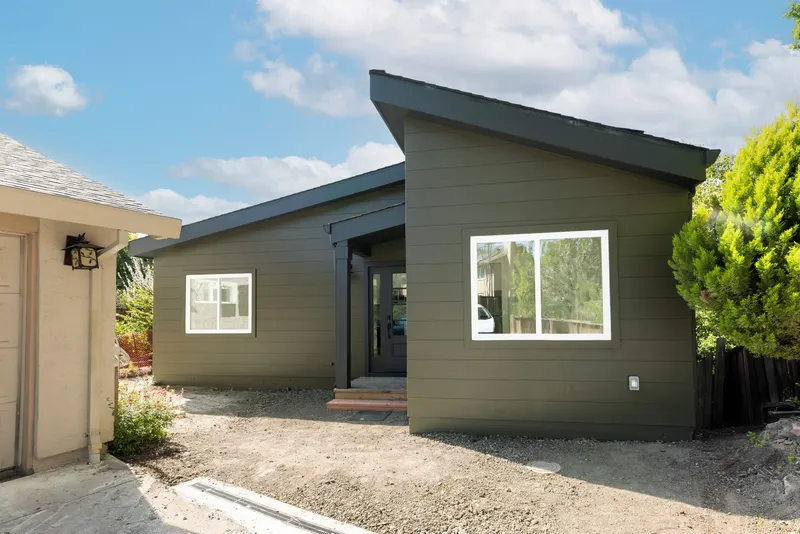
This month, a 749-square-foot, two-bedroom backyard home near downtown San Jose sold for $530,000 — to a first-time homebuyer, with its own street address, its own utility meters, no shared walls, and no HOA dues.
What made it front-page news: it’s an ADU. The main house it sits behind belongs to someone else, and it always will. This was the first time in California an ADU has been sold on its own deed, as its own property — and it’s the clearest sign yet that the backyard unit is becoming a genuinely new kind of Bay Area housing.
Here’s the law behind the sale, where it does and doesn’t apply, and what it means if you’re thinking about building.
The law that made it possible: AB 1033
For decades, the deal with ADUs was simple: you could build one, you could rent it out, but you could never sell it apart from the main house. Cities enforce that with a deed restriction recorded before the permit is issued — you’ll find that language in nearly every Bay Area city’s ADU process.
AB 1033, signed in 2023, changed the default. It lets each city or county choose to allow ADUs to be converted into condominiums and sold separately. San Jose was the first city in California to say yes, in the summer of 2024. The city approved the state’s first ADU condo conversion in August 2025, and the $530,000 sale closed in early July 2026. As of this writing, San Jose has approved a second conversion with two more applications in review — we cover the program in detail in our San Jose ADU guide.
The conversion is a real legal process, not a form you file:
- It’s a condo, not a lot split. The land stays one lot. The house and the ADU each become a separate legal unit on it — the same structure a two-unit condo building uses.
- There’s paperwork with the city and the county. A parcel map, a condominium plan, and CC&Rs (the recorded rules the two units share) all get drafted, reviewed, and recorded, and the ADU gets its own address.
- A small homeowners association comes with it. Two units sharing a lot legally form an HOA, even when — as in the San Jose sale — the units are fully independent and the dues are zero.
- Your mortgage lender must agree in writing. No consent, no conversion. This is often the make-or-break step for owners with a large loan balance.
- The unit gets a safety check. A certificate of occupancy or an equivalent housing-quality inspection is required before anything records.
Owners who’ve been through it describe roughly six months of surveying, legal drafting, and city review. It’s very doable — the first San Jose conversion cleared the city’s review in about two months — but it belongs in your plan from the start, not bolted on at the end.
AB 1033 is not SB 9
The two laws get mixed up constantly, because both sound like “selling part of your property.”
SB 9 (2021) is about the land: it lets you split one single-family lot into two parcels, or put two homes on one lot, through a streamlined city process. When an SB 9 lot split is done, there are two pieces of land with two owners.
AB 1033 (2023) never divides the land. One lot, two legal units on it — you sell the ADU the way you’d sell a condo, not the way you’d sell a parcel. And unlike SB 9, which applies statewide, AB 1033 does nothing until your city opts in.
If you’ve heard “you can sell your backyard now” at a dinner party, this distinction is usually the missing piece.
Which cities allow it so far
As of July 2026, the opt-in list is short: San Jose, Santa Monica, Santa Cruz, San Francisco (limited to certain newer detached ADUs), and San Diego — both the city and the county’s unincorporated areas. Berkeley has been studying it publicly but hasn’t adopted it.
That’s a handful of jurisdictions out of more than 500 in the state. But the direction is clear: San Jose proved the process works end to end, a real unit sold at a real price a first-time buyer could reach, and other councils are watching.
What about Marin and the rest of the Bay Area?
No Marin city — and not the county — has opted in yet. The ADU ordinances in San Rafael, Mill Valley, Novato, San Anselmo, Tiburon, Larkspur, and Ross all still bar separate sale, and the same is true across most of the East Bay.
That could change, and the interesting part is what happens if it does: AB 1033 conversions aren’t limited to new construction. A permitted, well-documented ADU that exists today could be eligible for conversion the day a city opts in. In a county where a 749-square-foot standalone home selling for $530,000 would be the housing bargain of the decade, that’s worth taking seriously.
We’re not advising anyone to build because their city might opt in — that’s speculation. But it’s one more way a permitted ADU has become the rare improvement that can pay for itself several ways: rental income now, housing for family when you need it, and possibly a separable asset later.
Build it conversion-ready anyway
Here’s the practical takeaway, and it costs almost nothing extra if you decide early. The San Jose sale worked cleanly because that unit was built like a small standalone home:
- Detached, with its own entrance — and its own address, which most Bay Area cities assign anyway.
- Its own utility metering, or at least utility runs designed so they can be separated later without trenching up the yard.
- A clean permit record — approved plans, inspections signed off, certificate of occupancy on file. A conversion is a title process, and title processes reward good paperwork.
- A site plan that stands on its own — parking, access, and drainage that make sense for the ADU as its own unit, not just as an accessory.
This is how we already like to build ADUs, because the same qualities make a better rental and a better home for family. When a client tells us separate sale might someday be part of the picture, we design and document with that checklist in mind from day one.
If you’re earlier in the process, start with can I build an ADU on my property? for the feasibility questions, and our ADU process guide for how a project actually unfolds from first idea to final inspection.
Common questions
Can I sell my ADU separately from my house today?
Only if your city or county has opted into AB 1033. As of July 2026 that list is short — San Jose, San Francisco, Santa Cruz, Santa Monica, and San Diego (both the city and the unincorporated county) — and no Marin or East Bay city is on it yet. Everywhere else, a recorded restriction bars selling the ADU apart from the main house.
Is this the same thing as SB 9?
No. SB 9 is the 2021 law that lets you split one single-family lot into two parcels of land, or put two homes on one lot. AB 1033 doesn’t divide the land at all — the house and the ADU stay on one lot and each becomes its own legal unit, like two condos sharing a property. SB 9 applies statewide; AB 1033 only works in cities that choose to allow it.
Does my mortgage lender have a say?
Yes — a big one. Before the conversion can be recorded, every lender with a lien on the property has to consent in writing. A lender can refuse, or ask for conditions. If you carry a large mortgage, this is the first conversation to have.
What happens with property taxes after a sale?
In general, once the ADU sells as its own unit it gets its own assessment based on its sale price, while the main house keeps its existing tax basis. The details depend on your county, so confirm with the county assessor before you count on any particular outcome.
Should I build differently if I might want to sell the ADU someday?
Yes — and the choices are inexpensive if you make them early. A detached unit with its own entrance, its own utility meters (or at least utility runs that can be separated later), and a clean, complete permit record is far easier to convert than one that shares systems with the house. Those same choices also make the ADU a better rental in the meantime.
The bottom line
One sale doesn’t change the market overnight. But San Jose just showed that a backyard ADU can become a real, sellable, financeable home — and every city that opts into AB 1033 from here makes that path more common. Whether or not your city ever allows it, the ADUs best positioned for that future are the ones built like small standalone homes, with clean permits and good records. That’s worth doing regardless.
Sources: City of San José — ADU condominium conversions (AB 1033), AB 1033 (2023) bill text, and reporting by KQED and ABC7 News. Details here were current as of July 2026 and are subject to change — confirm your city’s current rules before making decisions.
Planning an ADU in the Bay Area?
Burton Builders designs and builds ADUs across the Bay Area — and if separate sale might someday be part of your picture, we can help you make the early choices that keep that door open. Start a conversation about your property.