ADU Impact Fees in California: What SB 1117 Changes in 2027
Starting January 1, 2027, California cities can only charge ADU impact fees on the square footage above 750. How SB 1117 works, a worked example with real math, and the fees it doesn't touch.
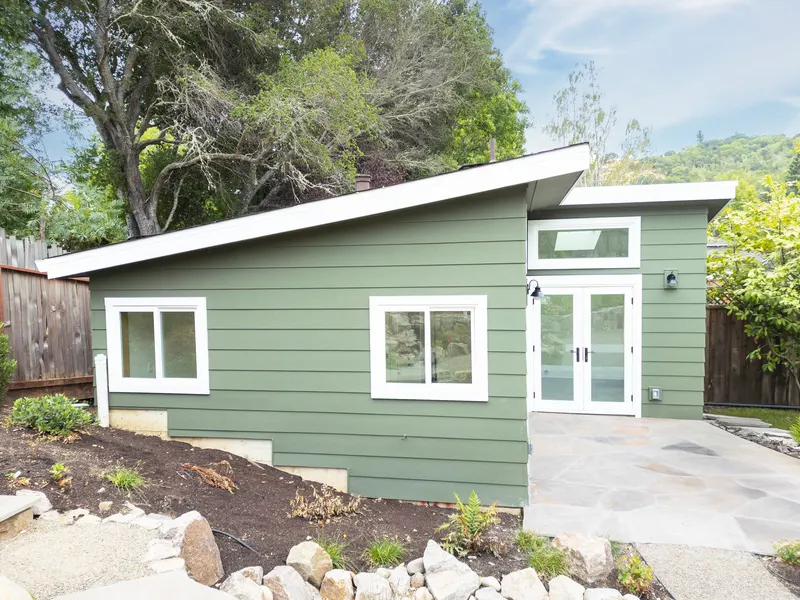
Starting January 1, 2027, California cities and counties can only charge impact fees on the part of an ADU that’s bigger than 750 square feet. Not the whole unit. Just the square footage over the line.
The change comes from SB 1117, which Governor Newsom signed on September 29, 2026, the same day he signed AB 956, the two-detached-ADU law. SB 1117 got far less attention, but for anyone deciding how big to build, it may matter more. Here’s what it says, what it doesn’t cover, and how to use it, based on the bill text, the Legislature’s own analyses, and the state housing department’s ADU handbook.
What an impact fee is
When you build something new, your city can charge fees to help pay for the public things your project will use: parks, roads, fire stations, libraries, storm drains. These are called impact fees (sometimes development fees or mitigation fees). They’re set under a state law called the Mitigation Fee Act, which requires a city to show a reasonable connection between the fee and the actual cost of serving the new home.
Impact fees are not the same as your building permit fee, which pays for plan check and inspections. They’re also separate from school fees and from water and sewer connection charges, which we’ll get to below. In some Bay Area cities impact fees on a full-size ADU run into the thousands of dollars. In others, like Berkeley, there are none at all.
How the rule works today, through the end of 2026
State law already gives ADUs a break on impact fees. The rule dates back to 2019 and has two parts:
- 750 square feet or less: no impact fees at all. (For a junior ADU, the line is 500 square feet.)
- More than 750 square feet: your city can charge impact fees, but only “proportionately in relation to the square footage of the primary dwelling unit.” In plain terms, the ADU pays a share of the fee a brand-new house would pay, based on how big the ADU is compared to your house.
The state housing department (HCD) gives this example in its ADU handbook: a 2,000-square-foot house with a 1,000-square-foot ADU “could result in 50 percent of the impact fee that would be charged for a new primary dwelling on the same site.”
Here’s the problem. Under that rule, the moment an ADU goes one square foot over 750, the whole unit counts. A 750-square-foot ADU pays nothing. A 751-square-foot ADU pays a fee based on all 751 square feet. The bill’s sponsor called this the “fee cliff,” and it’s why so many ADUs in fee-heavy cities get designed to 749 square feet.
What SB 1117 changes
SB 1117 rewrites one sentence of state law so that for up to two ADUs on a lot, impact fees on an ADU over 750 square feet are “charged proportionately in relation to the square footage of the primary dwelling unit, and only on the area in excess of 750 square feet of interior livable space.”
So the first 750 square feet are always free. Only the square footage above 750 goes into the calculation, and that extra square footage is still compared to the size of your house.
A worked example
Say your city’s impact fees for a new house add up to $20,000, your house is 2,000 square feet, and you’re deciding how big to make the ADU.
| ADU size | Fee through 2026 | Fee starting 2027 |
|---|---|---|
| 750 sq ft | $0 | $0 |
| 751 sq ft | $7,510 (751 ÷ 2,000 × $20,000) | $10 (1 ÷ 2,000 × $20,000) |
| 800 sq ft | $8,000 | $500 |
| 1,000 sq ft | $10,000 | $2,500 |
Those are made-up fee totals to show the math, not a quote for any real city. But the shape is what matters. Today, going from 750 to 800 square feet can cost thousands of dollars in fees. Starting in 2027, that same 50 square feet costs a few hundred.
The fine print
A few details worth knowing before you count on this:
- It applies to lots with up to two ADUs. That lines up with AB 956, which lets you build two detached ADUs behind a single-family home starting the same day. On a lot with three or more ADUs, which under state law is mostly apartment properties, the old full-size rule still applies.
- The 750 line doesn’t move. SB 1117 doesn’t raise or lower the exemption. An ADU of 750 square feet or less still pays zero impact fees, and that’s still the cheapest size on paper.
- It uses “interior livable space.” Garages, porches, and decks don’t count toward the 750.
- It covers every city, including charter cities. The bill includes a finding that housing is a matter of statewide concern, which is how the Legislature makes a rule stick in cities like San Francisco and Oakland that have their own charters.
- Cities have to update their ordinances. A local ADU ordinance that conflicts with state law doesn’t hold up. Expect fee schedules to be revised through 2027, and don’t be surprised if a counter staffer hasn’t heard of the bill yet in January.
What about projects already in progress?
This is the open question. SB 1117 takes effect January 1, 2027, but it doesn’t say whether what matters is when you applied for your permit, when it was issued, or when you pay the fee.
That timing matters because of how impact fees are usually collected. Under the Mitigation Fee Act, a city generally can’t require you to pay impact fees until final inspection or the certificate of occupancy, whichever comes first, unless it has a funded construction plan for the facilities the fee pays for or is reimbursing itself for money already spent. Practice varies from city to city. El Cerrito, for example, collects impact fees before the certificate of occupancy rather than when the permit is issued.
If your ADU is over 750 square feet and will finish in 2027, ask your city in writing how it will calculate the fee and when it’s due. Get the answer before you pull the permit. We can’t promise what any city will decide, but it’s a reasonable question with real money behind it.
What SB 1117 doesn’t cover
“No impact fees under 750” has always been one of the most misunderstood lines in ADU law, because homeowners hear it as “no fees.” It isn’t. SB 1117 doesn’t change any of these:
- Water and sewer connection fees and capacity charges. The law specifically says these are not impact fees. For an ADU built inside your house or converted from an existing garage, your utility can’t charge a connection fee at all. For a new detached ADU, it can, as long as the charge is in proportion to the ADU’s size or its plumbing fixtures. In some East Bay and Marin districts these charges are one of the biggest numbers on the fee sheet. Novato and Pleasanton are two examples where the sewer connection charge scales with every square foot, with no 750 break.
- School fees. School districts charge their own fee per square foot under a different law, and their threshold is 500 square feet, not 750. An ADU under 500 square feet pays none. Above that, the district’s per-square-foot rate applies to the ADU.
- Building permit and plan check fees. These are based on the construction value of your project and apply to every ADU, whatever its size.
- Fees on your main house. SB 1117 is about ADUs. It doesn’t change what a new house or an addition pays.
So the honest way to think about it: SB 1117 takes one fee category and makes it much gentler above 750 square feet. The other categories still work the way they did.
What this means for how big to build
For years, our advice in fee-heavy cities has been blunt: stay at 749 square feet unless you have a strong reason not to. Starting in 2027, the answer depends more on what you want from the unit.
- 750 is still the free line. If you’re happy with a one-bedroom unit around 750 square feet, nothing changes, and you still pay no impact fees.
- The 800 to 1,000 range gets much cheaper. If you’ve been talking yourself out of a second bedroom or a real living room to stay under 750, run the numbers again. In the example above, going to 1,000 square feet costs $2,500 in impact fees instead of $10,000.
- Watch the other thresholds. School fees kick in at 500 square feet. Sewer and water charges often scale with every square foot. Those don’t change, so a bigger ADU still costs more in total fees. It just no longer costs a cliff’s worth.
- Your house size matters. Because the fee is still a share of what a new house would pay, based on your house’s size, a 1,000-square-foot ADU behind a 3,000-square-foot house pays a smaller share than the same ADU behind a 1,500-square-foot house.
The size that’s right for your family is still the right starting point. SB 1117 just removes one of the reasons to shrink it.
How SB 1117 fits with AB 956
The two bills were signed together and work together. AB 956 requires cities to approve two new detached ADUs behind a single-family home starting January 1, 2027. SB 1117 makes sure that if you build two, and one or both are over 750 square feet, you only pay impact fees on the square footage above 750 for each.
If you’re planning two units, the pairing matters: two 800-square-foot ADUs behind a 2,000-square-foot house would pay impact fees on 100 square feet total, not 1,600. That’s the difference between a budget line and a rounding error.
If you’re planning an ADU now
- Finishing in 2026? You’re under the old rules. If your design is near 750 square feet, the cliff still applies, so size carefully.
- Starting design now, building in 2027? Design for the size you actually want, then price the fees both ways. Ask the city how it will handle a permit issued late in 2026 with fees due in 2027.
- Thinking about two ADUs? Read the AB 956 article alongside this one. The 750 line applies to each unit separately.
- Not sure what your city charges? Our ADU city guides list the fee thresholds for 18 Bay Area cities, and our cost estimator gives a construction cost range to put the fees in context.
If you’re earlier in the process, can I build an ADU on my property? covers the first feasibility questions, and our ADU process guide walks through a project from first idea to final inspection.
Common questions
When does SB 1117 take effect?
January 1, 2027. Governor Newsom signed it on September 29, 2026. It applies to every city and county in California, including charter cities.
Does SB 1117 get rid of ADU impact fees?
No. ADUs of 750 square feet or less were already exempt from impact fees, and that doesn’t change. What changes is the math for bigger ADUs: starting in 2027, the fee is based only on the square footage above 750, not the whole unit.
Does SB 1117 lower school fees or water and sewer connection fees?
No. School fees are charged under a different law, with a 500-square-foot threshold instead of 750. Water and sewer connection fees and capacity charges are specifically left out of the definition of an impact fee, so SB 1117 doesn’t touch them either.
I’m building an ADU now. Do I get the new fee math?
It depends on timing, and the bill doesn’t spell it out. The law takes effect January 1, 2027. Impact fees are usually collected at final inspection or when the certificate of occupancy is issued, not when the permit is pulled, though cities can collect earlier in some cases. If your project will finish in 2027, ask your city in writing how it plans to calculate the fee.
What if my lot has more than two ADUs?
The new math only applies to lots with up to two ADUs. On a lot with three or more, the old rule stays: an ADU over 750 square feet pays a fee proportional to its full size. In practice that mostly affects owners of apartment buildings, which can have up to eight detached ADUs under state law.
The bottom line
SB 1117 doesn’t make ADUs free to permit, and it doesn’t move the 750-square-foot line. What it does is take away the penalty for crossing it. Starting in 2027, an ADU that’s a little bigger than 750 square feet pays a little in impact fees, instead of paying as if the exemption never existed. For a lot of Bay Area homeowners, that’s the difference between a one-bedroom unit designed around a fee schedule and a two-bedroom unit designed around how they’ll actually live in it.
Sources: SB 1117 (2026) bill text, Chapter 809, Government Code § 66311.5 (ADU fees), Assembly Local Government Committee analysis of SB 1117 (July 1, 2026 hearing), Senate and Assembly analyses and vote history, HCD Accessory Dwelling Unit Handbook (updated March 2026), Government Code § 66007 (when impact fees are collected), Senator Cervantes’s SB 1117 fact sheet (August 3, 2026), and the Governor’s September 29, 2026 bill signing announcement. Details were current as of October 2026. Cities will be updating their fee schedules through 2027, so confirm the current numbers with your planning department before you design.
Deciding how big to build?
Burton Builders designs and builds ADUs across the Bay Area and Marin. If you want to know what an 800- or 1,000-square-foot unit would really cost in fees on your lot, under this year’s rules and next year’s, start a conversation about your property.