An El Cerrito ADU builder’s guide, from the flats to the hills.
El Cerrito is a few minutes from our Richmond office, and we’ve built here. It’s an ADU-friendly city with a genuinely useful fast track for smaller units — the in-law unit sized to slip under the line — and a set of design and hillside rules for bigger ones that reward knowing the code before you sketch.
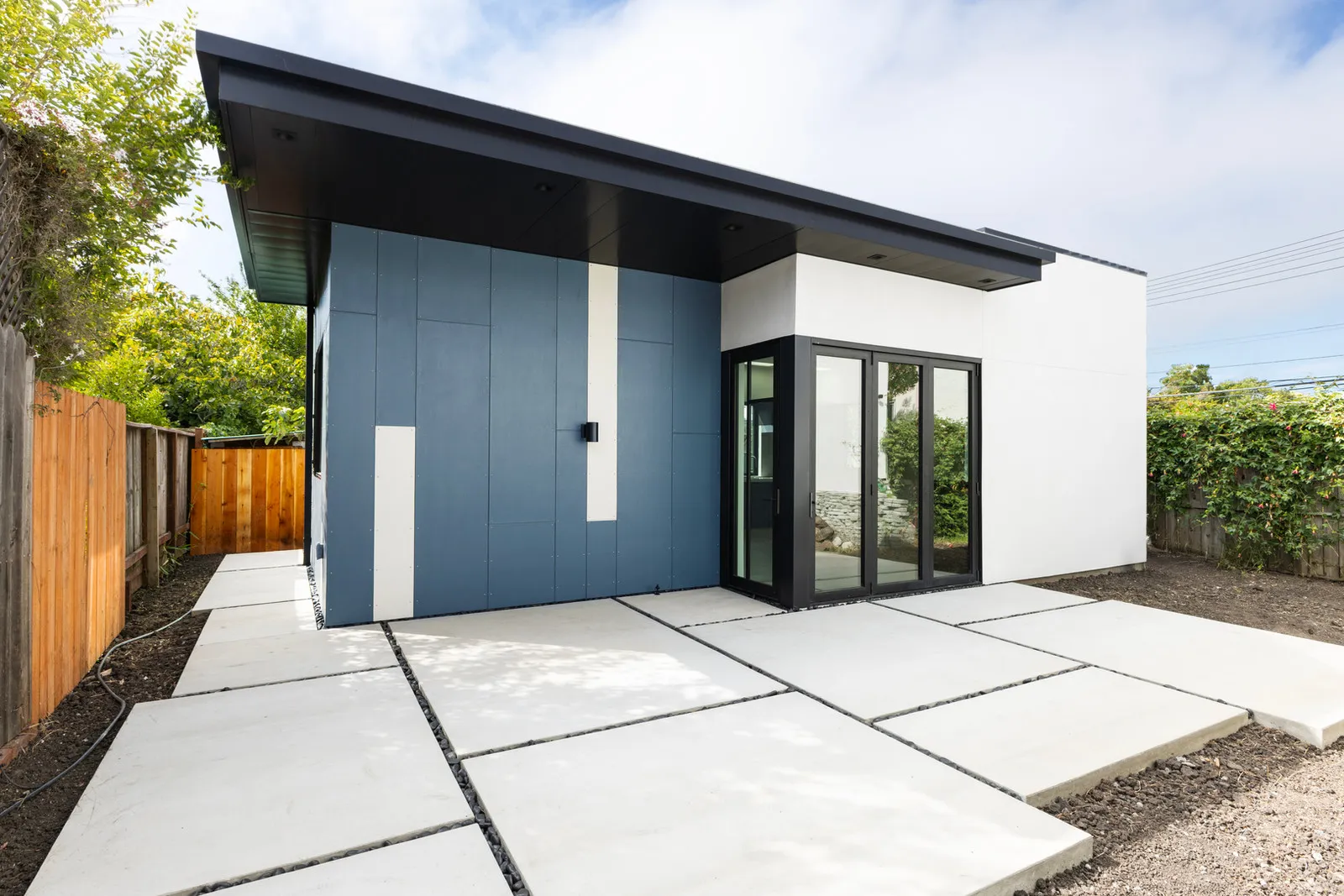
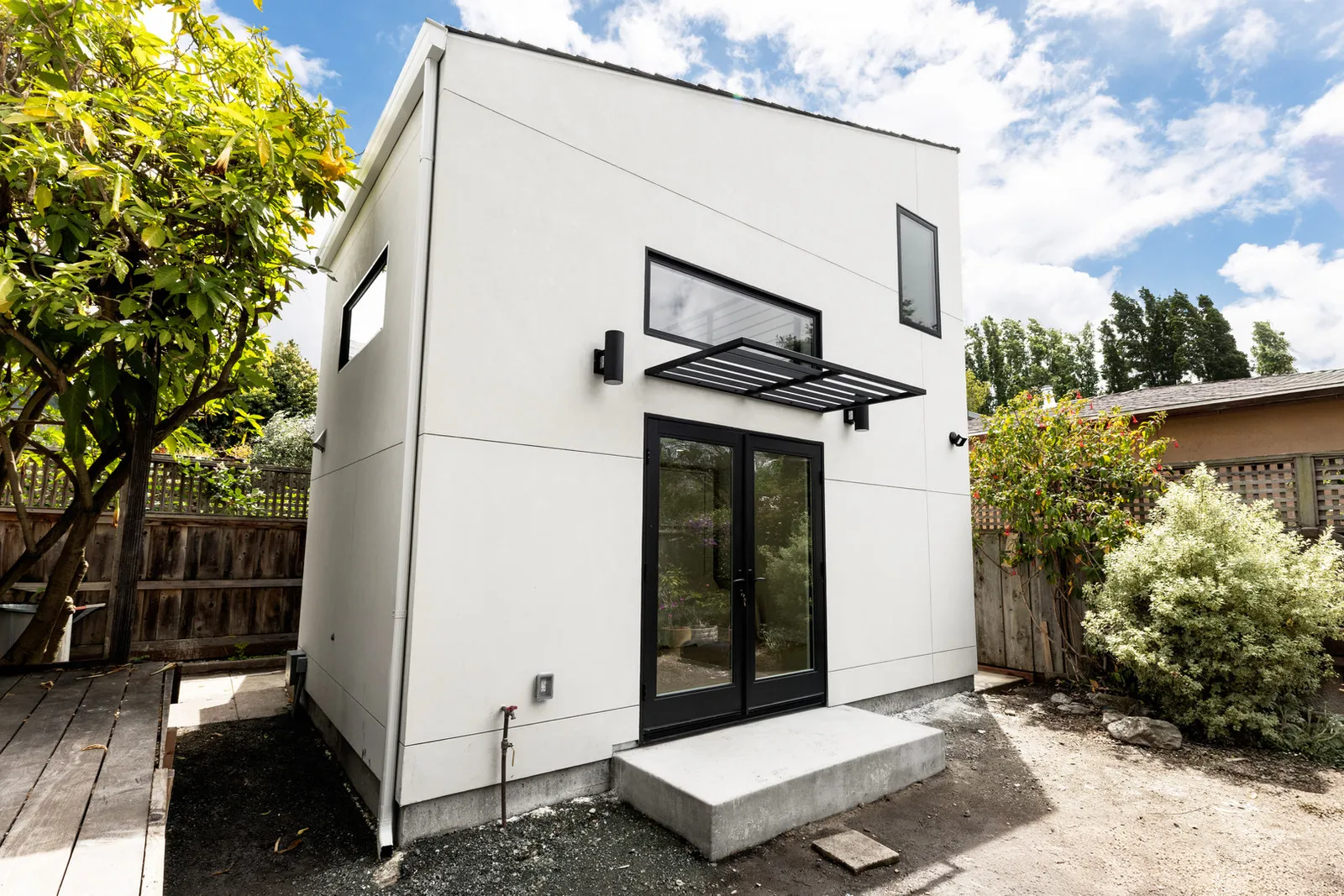
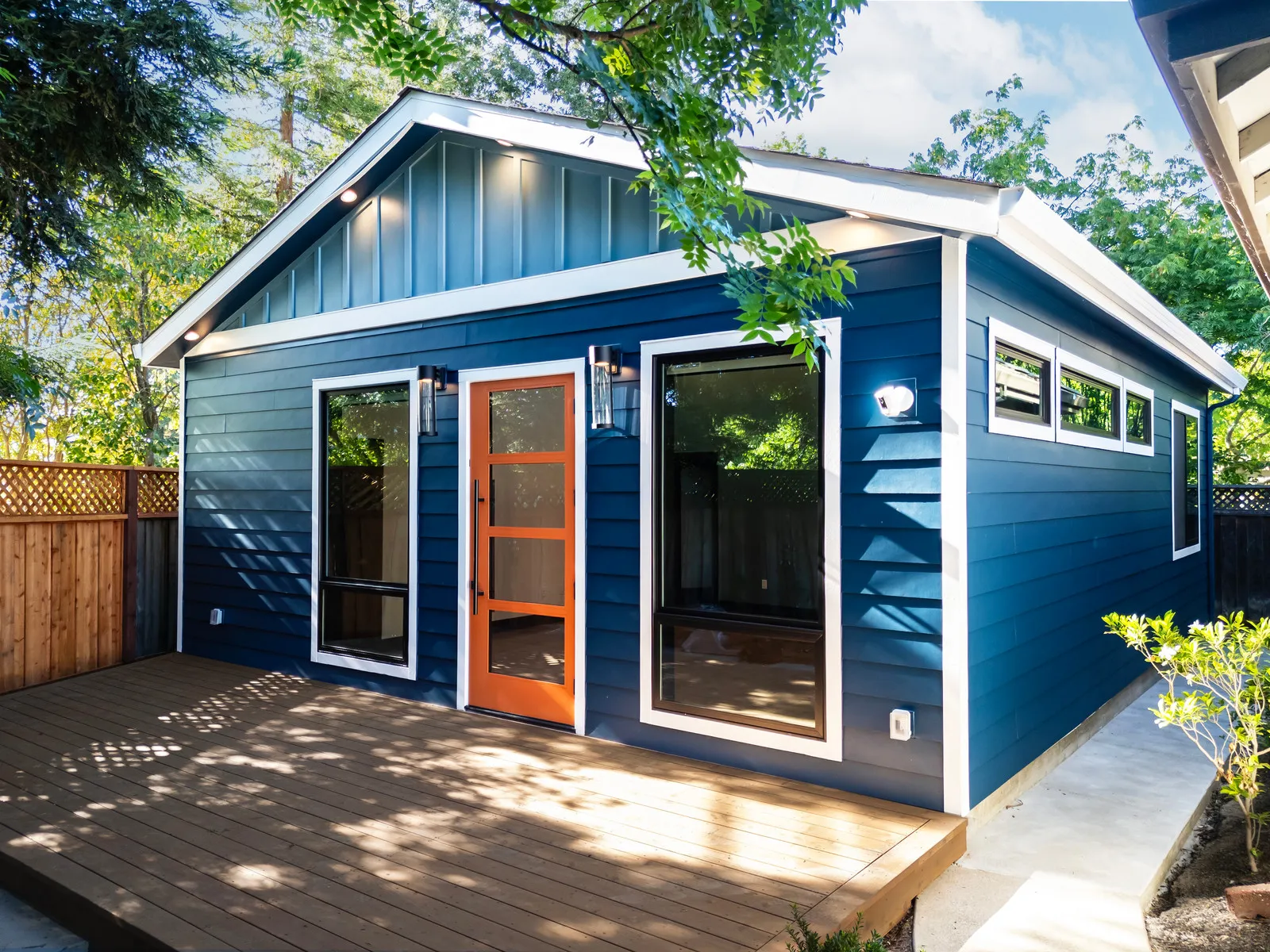
What it's actually like to build here.
El Cerrito splits neatly in two: the flats along San Pablo Avenue and the BART lines, where lots are compact and the city’s most generous allowances apply, and the hills, where slopes, landslide zones, and fire-severity maps start driving the design. Both halves are buildable — they’re just different projects.
The organizing fact of El Cerrito’s ADU code is the 800-square-foot line. At or under 800 square feet (and 16 feet of height, with 4-foot setbacks), a detached ADU must be approved regardless of the city’s lot-coverage and floor-area standards — and it goes straight to the Building Division without a planning application. Over that line, El Cerrito’s local standards wake up: a behind-the-house siting rule, architectural-compatibility review, window placement rules, and slope-tiered coverage limits. Neither path is bad, but they’re different processes with different budgets, and the choice deserves to be deliberate.
El Cerrito is also unusually good about publishing its numbers, so this guide can be more concrete about fees than most cities allow.
El Cerrito ADU rules, summarized.
850 sq ft for a studio/1-bed, 1,000 sq ft with 2+ bedrooms. Attached ADUs: half the main house or 800 sq ft, whichever is more, up to those caps.
Detached ADUs within a half-mile of a BART station or San Pablo Avenue — which covers much of the flats. 16 ft elsewhere; attached units can go higher within the daylight plane.
Plus 6 ft of separation from other structures, and detached ADUs must sit behind the main house.
No ADU parking required anywhere in El Cerrito, and no replacement parking when a garage is converted or demolished.
New ADUs; conversions run $1,187 per 300 sq ft. Plan review adds 65%. Universal Design earns a 25% discount — an El Cerrito original. (FY 2024–25 schedule.)
ADUs skip the STMP and TIF traffic fees — roughly $11,000 that other new residential units pay.
Checked against El Cerrito's published rules as of July 2026. Cities update their ADU standards regularly — always confirm current requirements with El Cerrito's planning and building departments, and we re-verify everything against the current code at the start of every project.
The 800-square-foot line runs through everything
El Cerrito routes ADU applications by size and type. Detached units of 800 square feet or less, and interior conversions, skip the Planning Division entirely — you apply straight to Building. Detached units over 800 square feet and attached ADUs file a planning application first, and that’s where the city’s local standards apply: the design must read as “substantially the same” as the main house in materials, roof pitch, and trim (the Zoning Administrator decides), windows near a neighbor’s side or rear yard must be high clerestory units, and lot coverage caps at 50% — dropping to 40% when the lot slopes more than 30%.
The state-exemption unit is the reliable path on El Cerrito’s tighter lots: 800 square feet, 16 feet tall, 4-foot setbacks, approved notwithstanding coverage and floor-area limits, no architectural-compatibility review. When a client’s program fits in it, the process gets simpler and faster. When it doesn’t, nothing’s wrong with the bigger unit — it just needs the extra standards designed in from the first sketch rather than discovered in review.
Worth knowing: on a single-family lot you can combine units — for instance an interior conversion ADU, a JADU, and a detached ADU up to 800 square feet. Conforming ADUs are ministerial with the standard 60-day state clock; only exceptions to the standards trigger a noticed hearing.
What it costs — with real numbers
El Cerrito prices building permits per 300 square feet: $1,649 per increment for new construction, $1,187 for conversions, with plan review adding 65%. Run the arithmetic on a new 800-square-foot detached unit and you get roughly $8,200 in core building and plan-check fees before smaller add-ons like the construction tax and state pass-throughs. Two quotable breaks: ADUs are exempt from the STMP and TIF traffic fees (about $11,000 for other new units), and an ADU built to Universal Design standards — step-free entry, accessible bath — earns a 25% discount on the building fee. That’s a rare incentive, and for anyone building with aging parents in mind, it aligns the discount with what you wanted anyway.
The back-end timing matters as much as the amounts: El Cerrito collects impact fees before the certificate of occupancy, not at permit issuance. School district fees apply over 500 square feet, the Stege Sanitary District’s impact fee starts at 750 square feet, and EBMUD decides case-by-case whether a water capacity charge applies. We put these on the budget from day one so the final stretch of the project doesn’t bring surprise invoices.
Stege deserves its own line. Instead of the flat $3,354 residential sewer connection fee, ADUs pay a per-fixture rate — $129 per equivalent fixture — which means your plumbing count is literally a budget decision. And if the parcel lacks a current sewer-lateral compliance certificate, expect lateral testing as part of the project, plus the regional EBMUD certificate requirement that kicks in on permits over $100,000. On El Cerrito’s older housing stock, we scope the lateral early, every time.
Hills lots: slope, soil, and the 2025 fire ordinance
In the El Cerrito hills, three map layers shape an ADU before architecture enters the picture. Slope: over 30%, the lot-coverage cap tightens for larger units, and the city’s fee schedule openly anticipates geotechnical review — soils reports get peer-reviewed at consultant cost plus 30%, and engineered retaining walls carry their own permit line items. Landslide zones: the city tells applicants to check them, and inside one, expect stricter foundation and material standards.
Fire is the third layer, and it got more formal in 2025 when the city adopted CAL FIRE’s updated hazard maps along with defensible-space rules — including the zone-zero standard barring combustibles within five feet of a structure — and point-of-sale hardening inspections for hills properties. ADUs aren’t prohibited anywhere in the fire zones; they just need ignition-resistant construction and a landscape plan that respects the five-foot rule. If you plan to sell the property someday, building the ADU to these standards now means the point-of-sale inspection later is a formality instead of a punch list.
Renting it, legalizing it, and the fine print
Renting an El Cerrito ADU takes two pieces of paper: a city business license and enrollment in the rent registry. Minimum term is 30 days — short-term rentals are out unless the unit was permitted before 2020. The ADU can’t be sold separately from the house. On owner-occupancy: the city’s 2021 ordinance still contains an owner-occupancy clause, but newer state law bars such requirements for ADUs — confirm current practice with Planning rather than assuming the ordinance text, and don’t let it scare you off; in practice standard ADUs across California rent without it.
One more program worth knowing: El Cerrito runs an ADU amnesty program under AB 2533. If your property has an unpermitted ADU built before 2020, it can be legalized without penalty by meeting health-and-safety standards — current zoning and energy code aren’t applied retroactively. We’ve seen these units add real, bankable value once they’re on the books, and bringing one up to standard is well-scoped work for a contractor who knows the checklist.
El Cerrito ADU questions, answered.
How long does it take to permit an ADU in El Cerrito?
How big can I build?
Do I need to provide parking?
Can I convert my garage?
What changes on a hills lot?
I have an unpermitted ADU. Can it be legalized?
Official El Cerrito ADU resources.
- City of El Cerrito — ADU information page
- City of El Cerrito — ADU regulations summary (PDF)
- City of El Cerrito — ADU amnesty program (AB 2533)
- City of El Cerrito — fire hazard severity zones
- Stege Sanitary District — permits and fees
Links verified July 2026. This guide is general information, not legal or permitting advice — rules change, and every property is different. Before making decisions, confirm current requirements with El Cerrito's planning and building departments through the official resources above.
Thinking about an ADU in El Cerrito?
Tell us about your lot and what you want to build. We'll give you a straight read on feasibility, budget, and what El Cerrito's process will look like for your property.