An ADU contractor’s field notes on Fremont’s generous rulebook.
Fremont quietly runs one of the most homeowner-friendly ADU codes in the East Bay: no parking requirement anywhere in the city, no city impact fees at any size, flat size caps with no bedroom games, and lot coverage that simply doesn’t count your ADU. The catches are a couple of sharp fee cliffs and — in some neighborhoods — the Hayward Fault itself. We’re an East Bay contractor with built work in Fremont, and this guide covers how the city’s rules actually play out for a granny flat, an in-law unit, or a backyard rental.
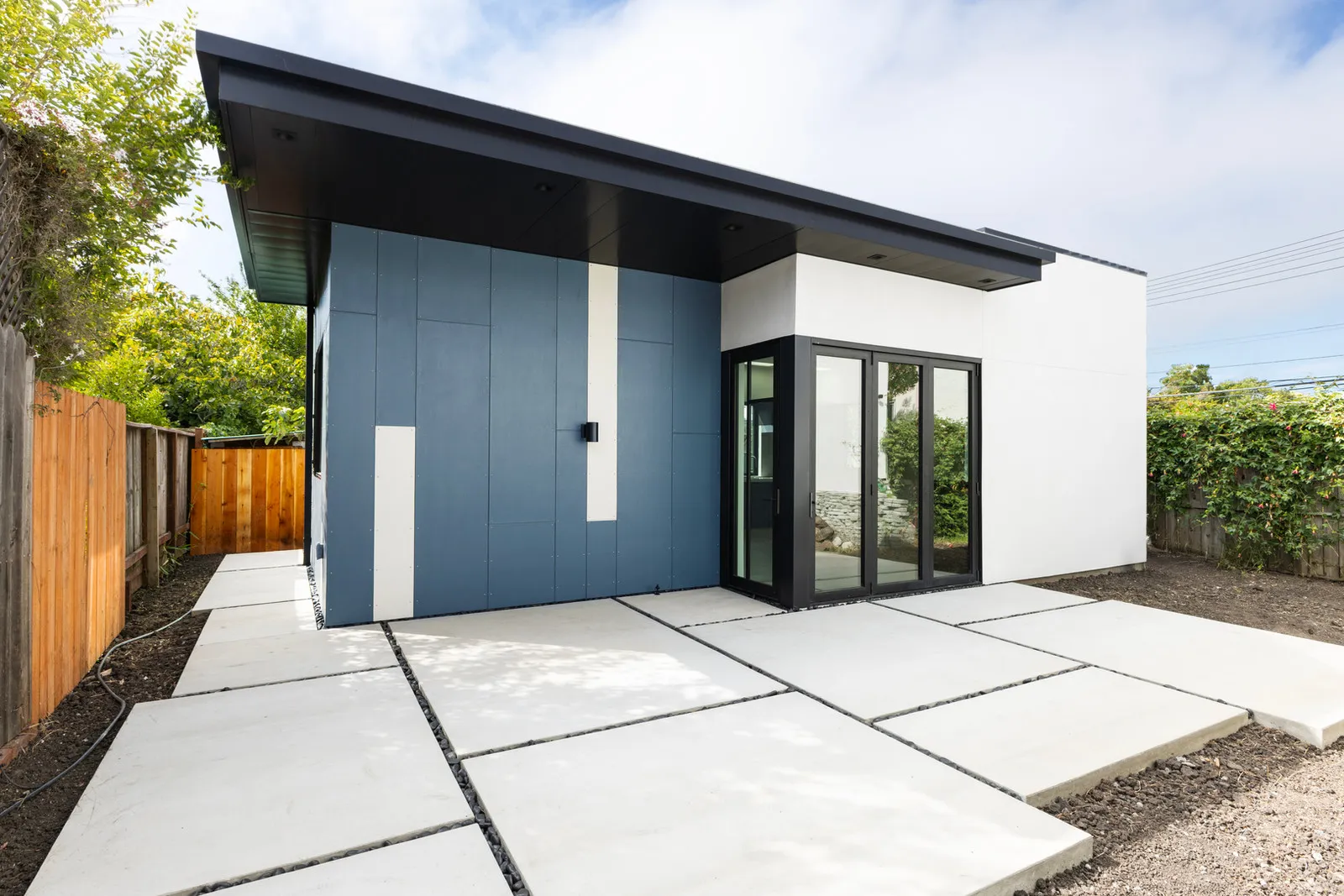
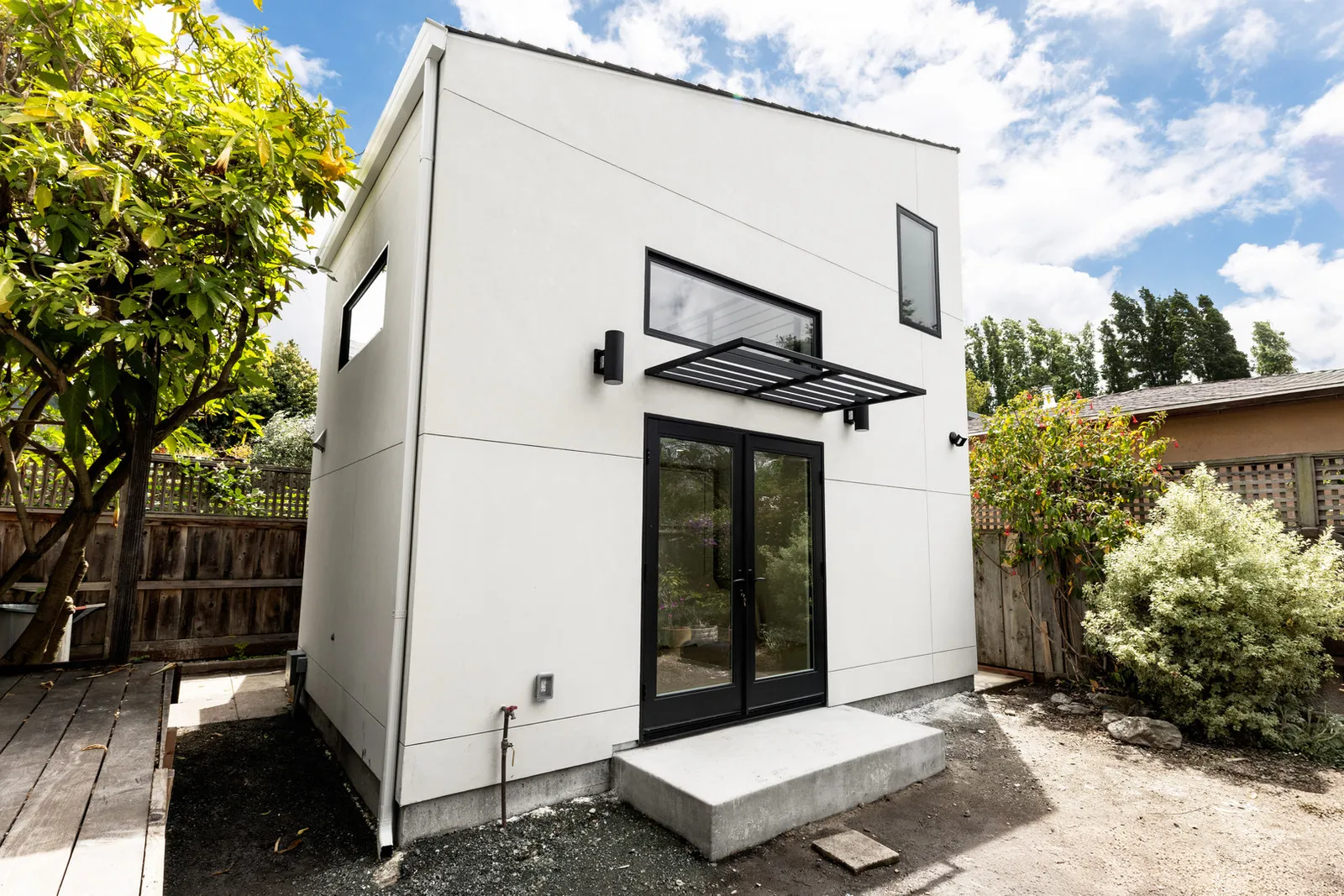
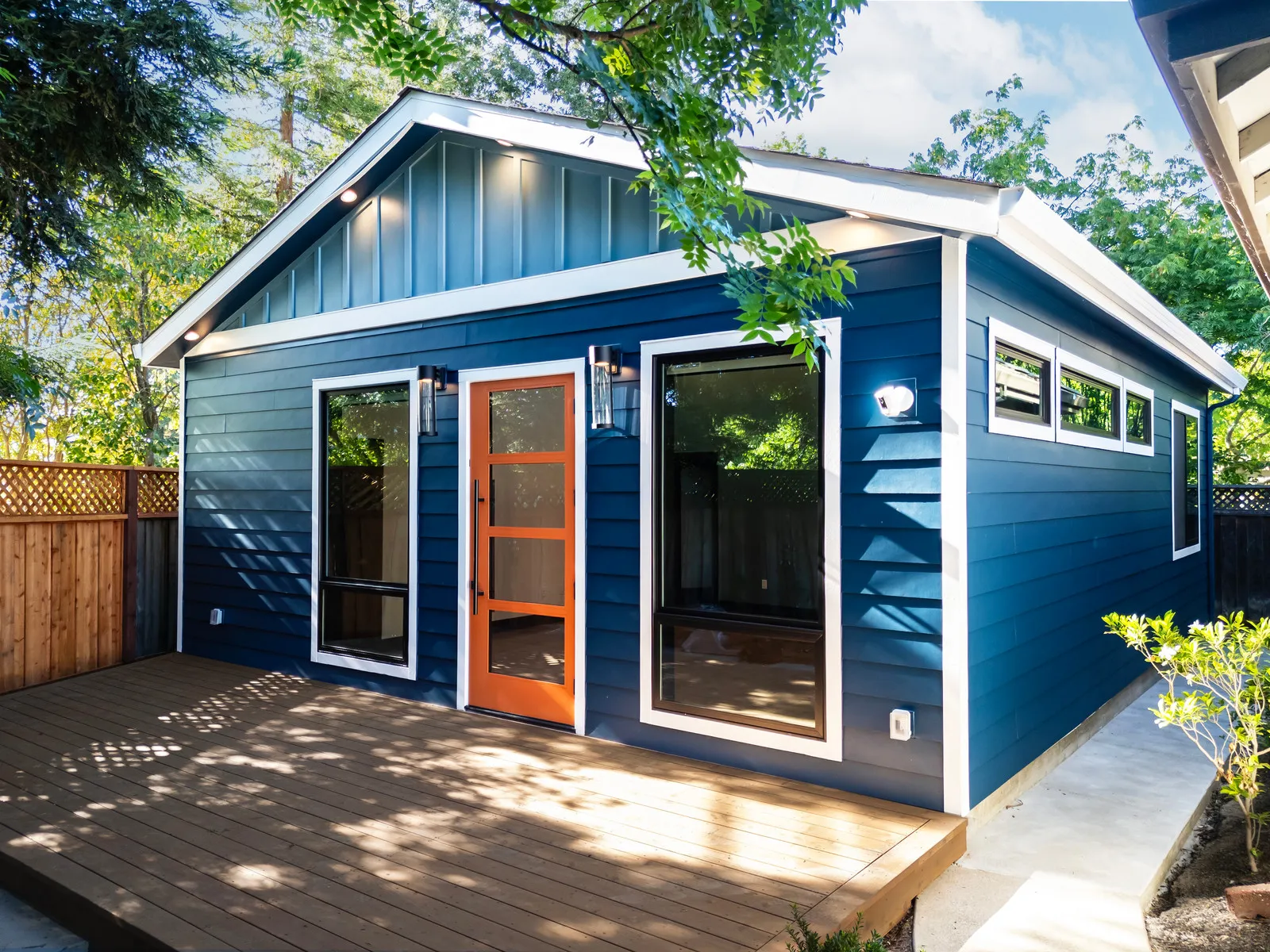
What it's actually like to build here.
Fremont keeps its ADU rules current — the code was amended as recently as May 2026 — and reads them generously. Detached ADUs run to a flat 1,200 square feet and attached units to 1,000, with no bedroom-count tiers (older summaries you’ll find online still describe tiers that no longer exist). Convert existing space — a garage, part of the house — and there’s no size limit at all. Approval is ministerial: staff-level review against objective standards, decided within 60 days of a complete application.
What makes Fremont stand out is what it doesn’t ask for. No parking space for the ADU, ever, and no replacement parking when a garage converts. No owner-occupancy. No city development impact fees on ADUs of any size — more generous than state law requires. And your ADU doesn’t count toward the lot’s maximum coverage. The costs that do bite come from outside city hall: a school-fee cliff at 500 square feet, sewer capacity charges on new detached square footage, and PG&E’s requirement that every ADU get its own electric meter.
Our Fremont work to date has been larger residential construction, and we build ADUs across the East Bay. Below: the rules, the one strict application quirk, the honest fee math, and what to check if your lot sits near the Hayward Fault or up in the hills.
Fremont ADU rules, summarized.
Flat caps: 1,000 sq ft attached, 1,200 detached, no bedroom tiers. ADUs converted from existing space have no size limit at all.
Fremont requires no ADU parking anywhere in the city and no replacement spaces when a garage is converted or demolished — beyond what state law requires.
The city exempts ADUs from development impact fees regardless of size, going past the state’s 750 sq ft rule. Normal permit fees still apply.
Fremont Unified exempts ADUs of 500 sq ft or less. At 501+, the $5.38/sq ft fee applies to the whole unit — a jump of roughly $2,700 for one extra square foot.
Completeness check within 15 business days, decision within 60 days. Design review and building permit can run concurrently through the city’s online portal.
PG&E requires every ADU to have its own electric meter — a cost and schedule item to plan early. Sewer capacity charges hit detached units but not conversions.
Checked against Fremont's published rules as of July 2026. Cities update their ADU standards regularly — always confirm current requirements with Fremont's planning and building departments, and we re-verify everything against the current code at the start of every project.
Generous rules, plainly written
Fremont’s size caps are refreshingly simple: 1,200 square feet detached, 1,000 attached, any number of bedrooms, measured as interior livable space — garages, porches, and breezeways don’t count against you. Detached height is the state-standard 16 feet (18 near major transit, plus two more to match the main roof’s pitch), while attached ADUs can rise to 30 feet or the zone’s limit, whichever is lower. Side and rear setbacks are 4 feet, and the state-exempt 800-square-foot detached unit is codified for lots where nothing else pencils.
Conversions get the best deal of all: an ADU carved out of existing space — living area, a garage, an accessory building — has no size limit, no setback requirement, and can add up to 150 square feet for entry and egress. Nonconforming conditions elsewhere on the property don’t have to be fixed as a price of approval, and the ADU doesn’t count toward maximum lot coverage. The one design prohibition worth knowing up front: no rooftop decks on ADUs.
The process — and its one strict rule
Applications go through the city’s online permit portal and get two tracks run concurrently: a ministerial design review and the building permit. The city must tell you within 15 business days whether the application is complete, and must decide within 60 days once it is. No hearings, no discretionary review, and a new address for the unit comes as part of the package.
The strict rule: an ADU needs its own standalone application. Bundle the ADU into a permit for work on the main house and the city will reject the whole submission — its ADU page says so explicitly, and it’s the most common self-inflicted delay we see homeowners make here.
Two programs to know about. Fremont runs a preapproved-plan track — a flat $1,000 plan-review fee and seven-business-day review — but the 2026 building-code cycle invalidated every plan approved under the old codes, and as of mid-2026 the city’s list shows no valid preapproved plans while designers re-certify. Check the city’s page for the current list rather than planning around it. Meanwhile, the ADU amnesty program gives owners of unpermitted units built before 2020 a legalization path: a health-and-safety inspection against the city’s checklist, then up to five years to pull permits and fix only what safety requires.
The fee math: cliffs, sewers, and meters
City hall’s side of the ledger is easy — Fremont charges ADUs no development impact fees at any size, so your city costs are ordinary permit and plan-check fees. The numbers that need managing come from the districts and utilities.
The school fee has a genuine cliff: Fremont Unified exempts ADUs of 500 square feet or less entirely, but at 501 square feet the $5.38-per-square-foot fee applies to the whole unit. If your program is flexible, that single foot is worth a design conversation. The fee is paid directly to the district, which certifies compliance back to the city before permit issuance — allow a couple of weeks for the paperwork.
Sewer follows the conversion-versus-new-build split: Union Sanitary District charges its per-square-foot capacity fee on detached ADUs and expansions beyond 150 square feet, while units within existing space pay none. The district’s published ADU rate has been in transition through 2026, so confirm the current per-square-foot number with USD directly before budgeting. Water fees from ACWD only appear if the project needs a new or upsized meter — an ADU running off the house’s existing water meter avoids them. Electricity is the opposite: PG&E requires a separate electric meter for every ADU, so that panel work, and PG&E’s timeline, belong in the plan from day one.
The fault, the hills, and the historic districts
Fremont has a constraint most East Bay cities don’t: the Hayward Fault runs through town, and state law prohibits placing a dwelling across an active fault trace — generally requiring a 50-foot setback and a geologic investigation by a licensed geologist for sites in the mapped Alquist-Priolo zones. Before falling in love with a backyard site plan, check your parcel on the state’s EQ Zapp fault-zone map; if you’re in a zone, the geology budget comes first.
In the hills, Fremont adopted the 2025 state fire-hazard maps in July 2025. Parcels in the very-high zone carry defensible-space obligations and wildland-interface construction standards, and the city publishes an address lookup for zone status. Fire sprinklers in the ADU are only required if the main house has them.
One more check for older neighborhoods: ADUs that modify structures listed in the California Register must follow objective historic-preservation standards — relevant in Fremont’s five historic districts, from Niles to Mission San Jose. For everything else, the citywide ministerial process applies, hills and flats alike.
Fremont ADU questions, answered.
How long does ADU permitting take in Fremont?
How big can I build?
Do I need to add parking?
What will the fees look like?
What if my lot is near the Hayward Fault?
I have an old unpermitted ADU. Can I legalize it?
Official Fremont ADU resources.
- City of Fremont — accessory dwelling units (ADUs)
- City of Fremont — ADU informational handout (Jan 2026, PDF)
- Fremont Municipal Code — § 18.190.005 (ADUs & JADUs)
- City of Fremont — preapproved ADU plans
- Union Sanitary District — ADU permits & fees
- Fremont USD — developer fees FAQ
- California Geological Survey — Alquist-Priolo fault zones (EQ Zapp)
Links verified July 2026. This guide is general information, not legal or permitting advice — rules change, and every property is different. Before making decisions, confirm current requirements with Fremont's planning and building departments through the official resources above.
Thinking about an ADU in Fremont?
Tell us about your lot and what you want to build. We'll give you a straight read on feasibility, budget, and what Fremont's process will look like for your property.