Building an ADU in Alamo? Your ADU contractor deals with the county, not a city hall.
Alamo has no city government — the whole community is unincorporated Contra Costa County, so ADU permits run through the county’s permit center in Martinez, under a county ordinance rewritten in 2025. That turns out to be good news: big-lot size allowances, almost no design rules, and a ministerial process. The homework is the land itself — septic versus sewer, creeks, trees, and slopes. We built an architect-designed ADU here, and this guide covers how county permitting actually works for an Alamo backyard home.
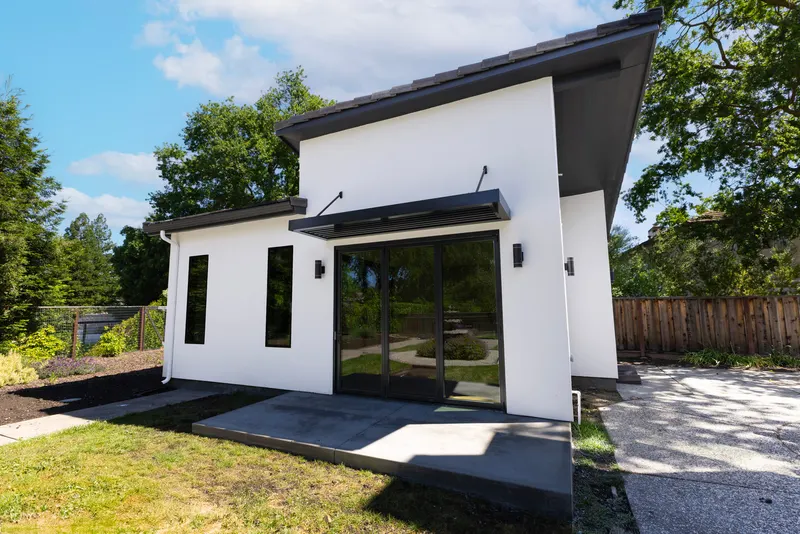
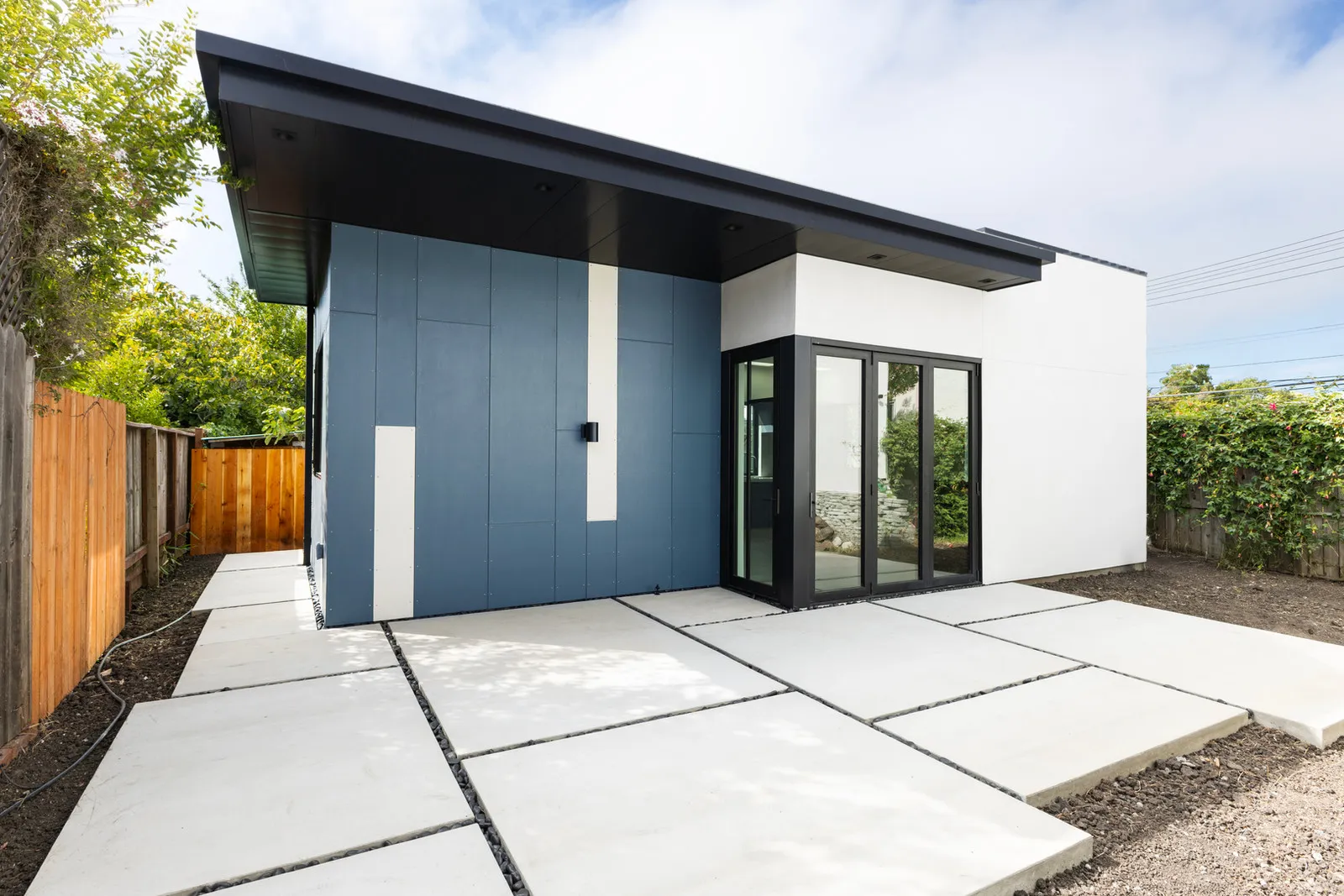
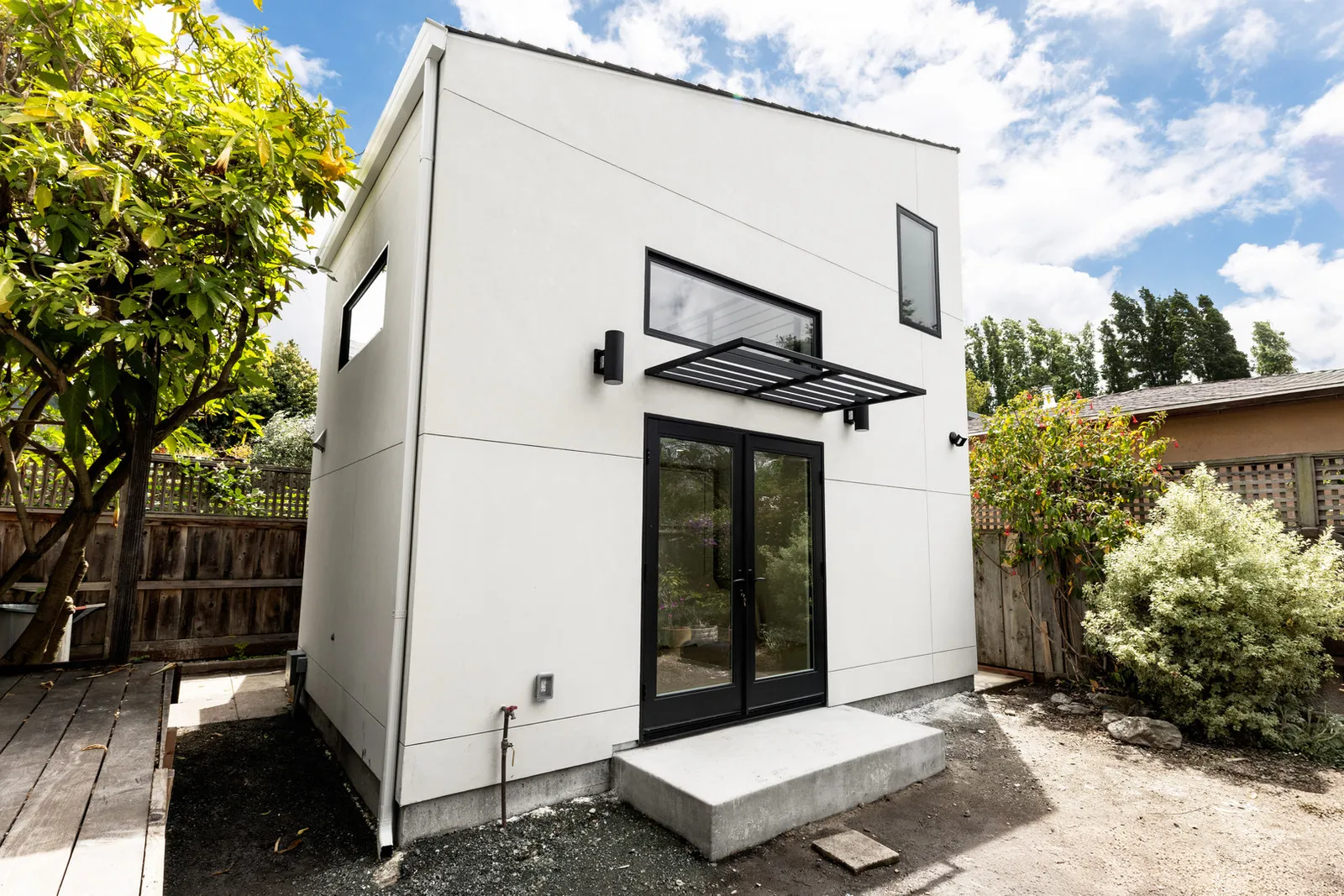
What it's actually like to build here.
The first thing to understand about an Alamo ADU is who you’re dealing with. There’s no Alamo planning department — land use is run by Contra Costa County’s Department of Conservation and Development, with applications filed through the county’s online permit portal or at the counter at 30 Muir Road in Martinez. Planning approval comes first, then the building permit, and review is ministerial: meet the standards and the county approves, with state law requiring a decision within 60 days of a complete application.
The county rewrote its ADU ordinance in May 2025, so it already reflects the latest state law — and most of what you’ll read about “Contra Costa ADU rules” online predates it. The rewrite was kind to Alamo: on lots of 12,000 square feet or more — which is essentially every conventionally zoned lot in town — detached ADUs run to 1,200 square feet, an attached garage of 600 to 800 square feet doesn’t count toward that size, and the old requirement that an ADU architecturally match the main house is simply gone.
What fills the rulebook’s place in Alamo is the land: whether the lot is on sewer or septic, where the creeks and protected oaks sit, and how the ground slopes. Below is how we navigate all of it.
Alamo ADU rules, summarized.
Alamo is unincorporated — ADU permits run through Contra Costa County DCD in Martinez (or the county ePermits portal). The Alamo MAC advises; it doesn’t permit.
On lots of 12,000+ sq ft — which covers virtually all of Alamo’s R-20 and R-40 zoning. An attached garage of 600–800 sq ft doesn’t count toward the total.
The county’s 2025 ordinance dropped the match-the-house requirement. The unit needs a permanent foundation and an entrance on the side or rear (or out of street view).
Sewered lots pay Central San $3.63/sq ft (charged on at most 1,200 sq ft). Septic lots need county Environmental Health approval before the ADU can be established.
EBMUD’s system capacity charge — roughly $19,500 on a standard meter — applies per new meter. An ADU served through the house’s existing meter avoids it.
The site plan must map protected trees near the work; creek-bank structure setbacks are verified at building permit; slopes over 5% can trigger a geotech report.
Checked against Alamo's published rules as of July 2026. Cities update their ADU standards regularly — always confirm current requirements with Alamo's planning and building departments, and we re-verify everything against the current code at the start of every project.
Your permit counter is in Martinez
Unincorporated permitting sounds intimidating and mostly isn’t — it just means one county department wears every hat. Current planning staff issue the ADU permit, building inspection reviews the construction drawings, and both live at the county’s Application and Permit Center in Martinez, with the ePermits portal handling submittals and fee payments online. The Alamo Municipal Advisory Council, whatever you may hear, has no permit authority.
The sequence is planning approval first, then building permit, and the review is ministerial — objective standards, no hearings, no design commission, and a 60-day state clock once the application is complete. The county also runs a preapproved-plan program for ADU vendors, and state law now gives owners of unpermitted units built before 2020 a ministerial legalization path, which the county has codified.
One thing county review is genuinely picky about is the site plan. The checklist wants setbacks, water and sewer lines for detached units, the parking space drawn to size, and — this one surprises people — the location, species, and size of every tree over 20 inches around within 50 feet of the construction area. In a community shaded by protected oaks, that survey is worth doing carefully the first time.
What Alamo’s big lots buy you
The county caps detached ADUs at 1,000 square feet on small lots — but at 1,200 square feet on lots of 12,000 square feet or more, and Alamo’s R-20 and R-40 zoning starts at 20,000. In practice, nearly every conventional Alamo lot qualifies for the full 1,200. On top of that, a detached ADU can carry an attached garage — 600 square feet on most Alamo lots, 800 on five-plus acres — that doesn’t count toward the unit’s size at all. Attached ADUs follow the same caps plus a half-the-main-house rule that can’t push a one-bedroom below 850 square feet.
Setbacks are 4 feet at the sides and rear for new construction, with the zone’s normal front setback. Conversions of existing structures need no setbacks and can add 150 square feet for entry and egress, and the state-exempt 800-square-foot detached unit — free of the county’s location and development standards entirely — can stack with a conversion ADU and a JADU on the same lot.
And the design rules? The 2025 rewrite removed the architectural-compatibility requirement that used to apply. What remains is objective and minimal: a permanent foundation, complete independent living facilities, and an exterior entrance on the side or rear of the building or otherwise out of view from the street. One parking space is required for a new ADU — tandem in the driveway satisfies it — with no replacement parking when a garage or even an uncovered space gives way to the unit. Owner-occupancy is not required; rentals must run 30 days or longer.
Miranda Creek
A 550-square-foot architect-designed backyard home in Alamo — inside the 800-square-foot envelope that state law exempts from the county’s location and development standards. The real design work was the land, not the rulebook: the unit was planned around easements, drainage, and solar, exactly the site questions county review probes on Alamo lots.
See this projectSewer, septic, and the fee sheet
The single biggest feasibility question on a semi-rural Alamo lot is what happens to the wastewater. On sewered lots, Central San’s ADU capacity fee is $3.63 per square foot, charged on at most 1,200 square feet — under $3,000 for an 800-square-foot unit, against $8,539 for a new house. Its piping rule: a detached ADU connects to the house’s lateral downstream of the main cleanout, never back through the house plumbing, and Central San reviews plans on paper only, so we start that submittal early.
On septic, the county’s ordinance is explicit: the system must be approved by the county health officer before an ADU can be established, through Environmental Health’s land-use program. Whether the existing system can absorb an ADU is a per-site engineering question — and for lots where the answer is no, Central San’s septic-to-sewer program can finance up to $65,000 of a public-sewer connection. This fork in the road is the first thing we scope on any Alamo project.
The rest of the fee sheet: the county’s ADU planning permit runs on a deposit-plus-time-and-materials basis (a $2,000 minimum deposit on the county’s published schedule — confirm current numbers when you apply), building-permit fees are valuation-based, and San Ramon Valley Unified charges $5.17 per square foot on units over 500 square feet, paid directly to the district. State law bars impact fees below 750 square feet. On water, EBMUD’s capacity charge — roughly $19,500 for a standard residential meter — applies per new meter, so an ADU served through the existing house meter avoids it entirely.
Reading the land: creeks, slopes, fire, and HOAs
Alamo’s lots are the reason to build here and the reason to plan carefully. Creekside parcels — and San Ramon Creek and its tributaries thread through town — carry county structure setbacks of 30 to 50 feet from the top of the bank depending on its height, verified before a building permit issues. Slopes over 5 percent can trigger a geotechnical report. Neither is a stopper; both belong in the site plan before design, not after.
Fire review comes from the San Ramon Valley Fire Protection District, and the 2025 state fire-hazard maps put parts of the SRVFPD area — including Alamo’s hillside edges toward Las Trampas and the Diablo foothills — in elevated severity zones. Check your parcel on the district’s map viewer early; elevated zones bring ignition-resistant construction and defensible-space requirements, and the district signs off before final inspection.
Finally, Alamo is HOA country, and the question comes up constantly: state law voids CC&R provisions that effectively prohibit or unreasonably restrict ADUs, and bars HOAs from attaching fees or financial requirements to them. Reasonable, cost-neutral design input can survive; a veto cannot.
Projects we've built in Alamo.
Alamo ADU questions, answered.
Who actually issues ADU permits in Alamo?
How big can I build?
Does the ADU have to match my house?
My property is on septic. Can I still add an ADU?
What will the fees look like?
Can my HOA stop the project?
Official Alamo ADU resources.
- Contra Costa County DCD — accessory dwelling units
- Contra Costa County Ordinance Code — Chapter 82-24 (ADUs, Ord. 2025-07)
- Contra Costa County — pre-approved ADU plan program
- Central San — plan review & ADU sewer rules
- San Ramon Valley USD — development impact fees
- San Ramon Valley Fire — fire hazard severity zones
- California HCD — ADU handbook (March 2026)
Links verified July 2026. This guide is general information, not legal or permitting advice — rules change, and every property is different. Before making decisions, confirm current requirements with Alamo's planning and building departments through the official resources above.
Thinking about an ADU in Alamo?
Tell us about your lot and what you want to build. We'll give you a straight read on feasibility, budget, and what Alamo's process will look like for your property.